Focused neurologic assessment with repeated reassessment
Edith’s case is not just a one-time neuro check. It is built around repeated neurologic assessment and recognition that a normal CT does not eliminate the need for continued observation.
Complete Edith Jacobson vSim case study covering focused neurologic assessment, nursing-care documentation, patient teaching on assessment and safety issues, fall-prevention measures, and SBAR handoff planning for future needs.
🔒 Secure · One-time payment · Instant download
Edith Jacobson’s vSim case centers on focused neurologic assessment and safe ongoing monitoring. That makes the page stronger than generic neuro copy because it combines repeated reassessment, nursing-care documentation, safety teaching, and SBAR handoff in one scenario.
The documentation and guided-reflection files keep the case clinically specific: students are asked to chart neurologic findings and patient responses, document all nursing care and the response to that care, teach Edith about assessments and safety issues, and prepare an SBAR handoff that communicates her future needs.
The completed bundle reflects the actual Edith Jacobson case flow: focused neurologic assessment, repeated checks despite an unremarkable CT, fall-safety planning, patient teaching, and escalation-ready communication for what comes next.
Edith’s case is not just a one-time neuro check. It is built around repeated neurologic assessment and recognition that a normal CT does not eliminate the need for continued observation.
The case is useful because it explicitly asks what safety measures should be built into Edith’s care to prevent falls, which makes the page more actionable than a general neurologic review.
The documentation assignment highlights patient teaching about assessments and safety issues, which gives the page stronger value for students who need both what to monitor and how to explain it clearly.
The scenario also adds handoff value because the SBAR must communicate Edith’s future needs and what changes would signal neurologic decline. That makes the page useful for both assessment and escalation language.
The strongest objective anchors in the case are the neurologic checks themselves and the expectation that the nurse will track any meaningful change in status rather than relying on one normal result.
The case is also useful because it ties those findings to immediate safety decisions: fall precautions, closer monitoring, patient teaching, and quicker handoff communication if Edith’s status changes.
The summary works because it frames Edith as a neurologic-safety patient whose care depends on focused assessment, clear documentation, and strong handoff communication as much as on routine observation.
The management value in this case comes from moving beyond symptom recognition toward repeated neurologic checks, fall precautions, safety reinforcement, and communicating clearly what should happen next if Edith worsens.
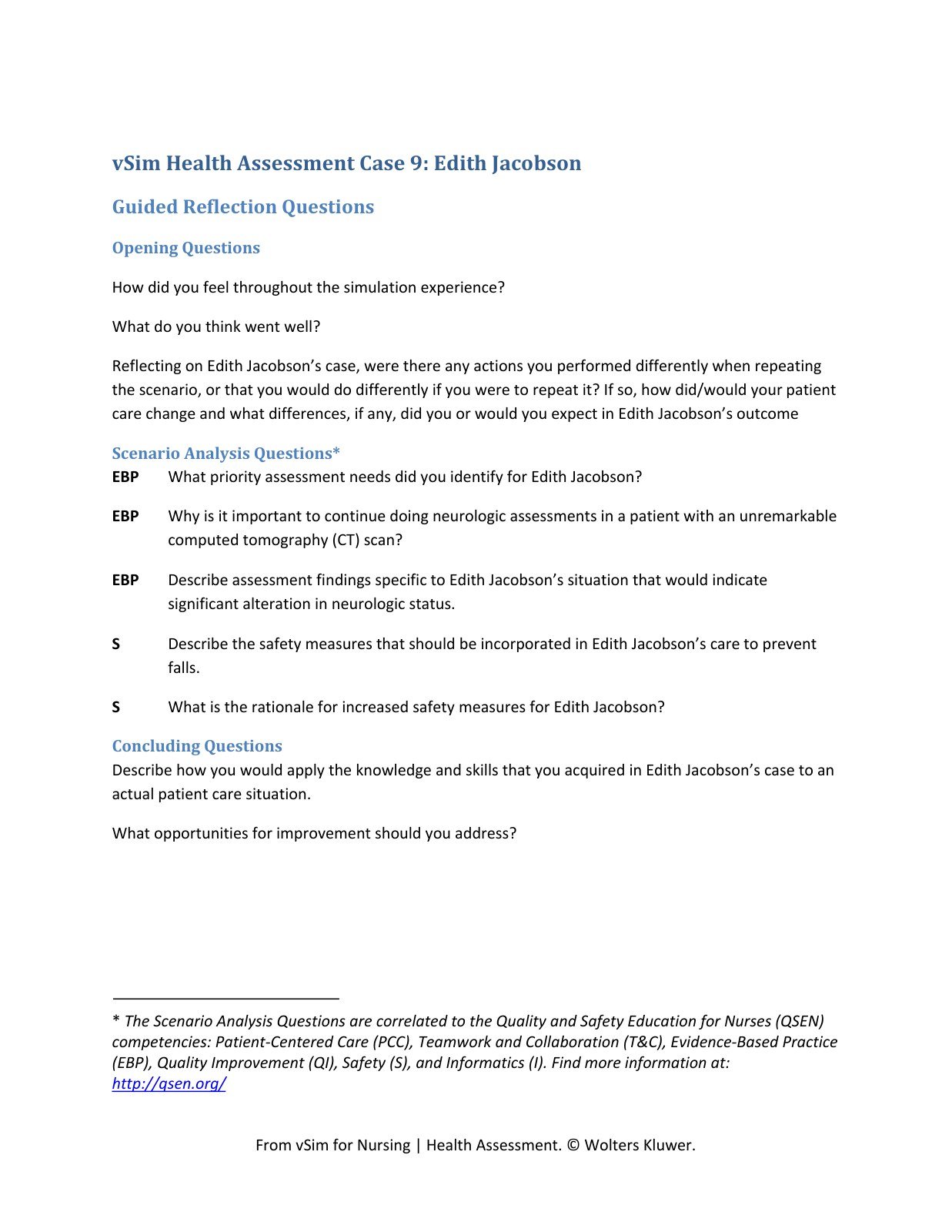
The guided reflection adds academic value because it explicitly addresses priority neurologic needs, significant changes that suggest deterioration, and the rationale for extra safety measures.
The education details add practical depth too: explaining assessments to the patient, reinforcing safety expectations, and making sure the next care step is clear before handoff.
The page combines focused neurologic assessment, repeated reassessment despite a normal CT, safety teaching, fall-prevention measures, nursing-care response documentation, and SBAR handoff planning. That gives it much more depth than routine neuro copy.
The neurologic context matters most because Edith still requires ongoing assessment and close safety monitoring even though the CT scan is unremarkable. That changes what the nurse must watch and teach.
The case emphasizes repeated neurologic checks, stronger fall precautions, continued patient teaching on safety issues, documentation of the response to nursing care, and a clear SBAR handoff for what needs monitoring next.
The teaching points focus on why neurologic assessments continue, what safety measures reduce fall risk, what symptoms would suggest neurologic decline, and why those precautions still matter when imaging does not show an acute problem.
Yes. The updated content is based on the attached Edith Jacobson vSim documentation and guided-reflection files, including neurologic-assessment, safety-teaching, fall-prevention, and SBAR-handoff themes.
Every document on NursingProxy is written by a board-certified PMHNP-BC — not AI, not tutors, not crowdsourced answers. When you access the Edith Jacobson documents you receive completed vSim case documentation, neurological assessment findings, safety teaching notes, SBAR handoff, and care plan. Each file is verified to meet the grading criteria used by nursing programs that assign this case.
Students use these materials to check their own work, understand what the platform rewards, and ensure their submission is complete before the deadline. The documents are written to reflect what a competent, thorough nurse would actually produce — not generic template answers.